

Quick-start guide: how to care for a cat from day one
Bringing a new cat or kitten into your home is an exciting milestone, but those first 24–72 hours set the tone for everything that follows. Whether you’re a first-time cat guardian or adding a feline friend to a household that already includes rabbits, understanding the essentials of proper cat care from the outset will help your new companion settle in smoothly and safely.
Although Rabbit Life Hack typically focuses on rabbit care, I’m Mia Hill—a veterinarian and passionate advocate for all companion animals—and I know many of our readers live in multi-pet homes. This comprehensive guide to caring for a cat is designed to help you integrate a cat into your household while keeping everyone (including your rabbits) safe and stress-free.
Here’s your first-day action plan to keep your cat happy and secure:
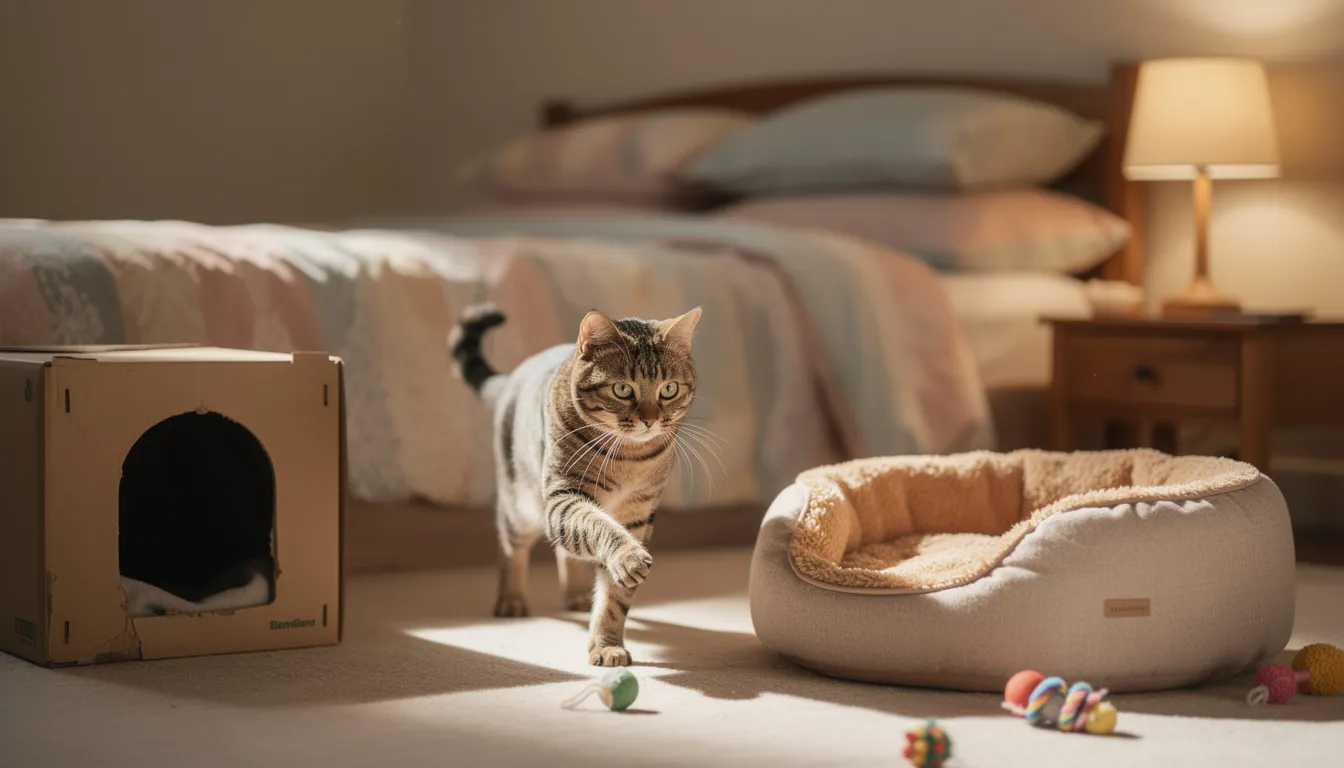
- Designate one quiet room as your cat’s sanctuary—a spare bedroom or home office works well
- Place the litter box on one side of the room, as far as possible from food and water bowls
- Provide hiding spots such as cardboard boxes, a covered cat bed, or space under furniture
- Let the cat explore at its own pace—resist the urge to force interaction or pick them up repeatedly
- Keep doors and windows secure to prevent escapes during the adjustment period
First week checklist
During the first seven days, focus on establishing routines and laying the groundwork for a healthy life:
- Schedule a veterinary check within 7 days (bring any paperwork from the shelter or breeder)
- Confirm vaccination status and parasite control—ask about flea, tick, and worm treatments
- Choose a diet appropriate for your cat’s life stage and establish a consistent feeding routine
- Begin gentle play and bonding sessions, keeping them short (5–10 minutes) to avoid overwhelming the cat
- Introduce grooming tools gradually, using treats as positive reinforcement
Even if your cat will eventually have outdoor access, keep your cat indoors strictly during the settling-in period—at least 2–4 weeks. This helps them recognize your home as their territory and reduces the risk of bolting in unfamiliar areas.
Choosing the right cat for your lifestyle
Before you bring a cat home, consider which type of feline will mesh best with your household, schedule, and existing pets. Just as you’d research rabbit breeds before adopting, taking time to find the right cat prevents mismatches that can lead to stress for both you and the animal.
|
Factor |
Kitten (8–16 weeks) |
Adult Cat (1+ years) |
|---|---|---|
|
Supervision needs |
High—requires constant monitoring |
Moderate—more independent |
|
Socialization |
Must be actively taught |
Usually established |
|
Energy level |
Very high |
Varies by individual |
|
Known personality |
Developing |
Already evident |
|
Health status |
Needs full vaccine series |
Often already neutered, vaccinated, and microchipped |
Young kittens require intensive supervision, socialization, and thorough environment-proofing. They’re curious, mobile, and can squeeze into surprisingly small spaces—similar to a rabbit kit but with the added ability to jump onto high surfaces.
Adopting an adult cat from a shelter offers significant benefits: the cat is typically already spayed or neutered, vaccinated, and microchipped. More importantly, their personality is known. Shelter staff can tell you whether a particular cat is a lap cat or independent, talkative or quiet, high-energy or calm.
When visiting homing centres, ask about:
- Temperament around children and noise
- Compatibility with dogs or rabbits
- Previous indoor or outdoor lifestyle
- Any known medical conditions or behavioural quirks
Multi-pet home tip: If you already have rabbits or other small pets, choose calmer, less predatory cats. Avoid breeds known for exceptionally high prey drive. Many cats can learn to coexist peacefully with rabbits, but starting with a compatible temperament makes integration much easier.
Essential supplies and home set-up
Setting up your home before your new cat arrives prevents last-minute scrambling and ensures your feline friend has everything they need from day one. Here’s a practical shopping list with placement guidance:
Core supplies
- Litter tray: Sturdy, appropriately sized (larger is usually better); avoid covered boxes for anxious cats
- Cat litter: Unscented, fine-grain clumping litter is often preferred
- Food and water bowls: At least two ceramic or stainless-steel bowls—never plastic, which can harbor bacteria
- Cat food: Species-appropriate, life-stage-specific formula (kitten or adult)
- Scratching posts: At least one vertical post (60–80 cm tall) plus horizontal cardboard or sisal scratchers
- Cat brush: Appropriate for your cat’s coat type
- Cat carrier: Essential for vet visits and emergencies
- ID tag and microchip registration: Update details immediately upon adoption
Creating a safe room
Your cat’s initial sanctuary should include:
- A comfortable cat bed or blanket in a quiet corner
- Hiding boxes (cardboard with entry holes cut out works perfectly)
- The traditional litter box is positioned on one side of the room
- Food and water bowls are on the opposite side
- Vertical spaces like shelves or cat trees for climbing and observation
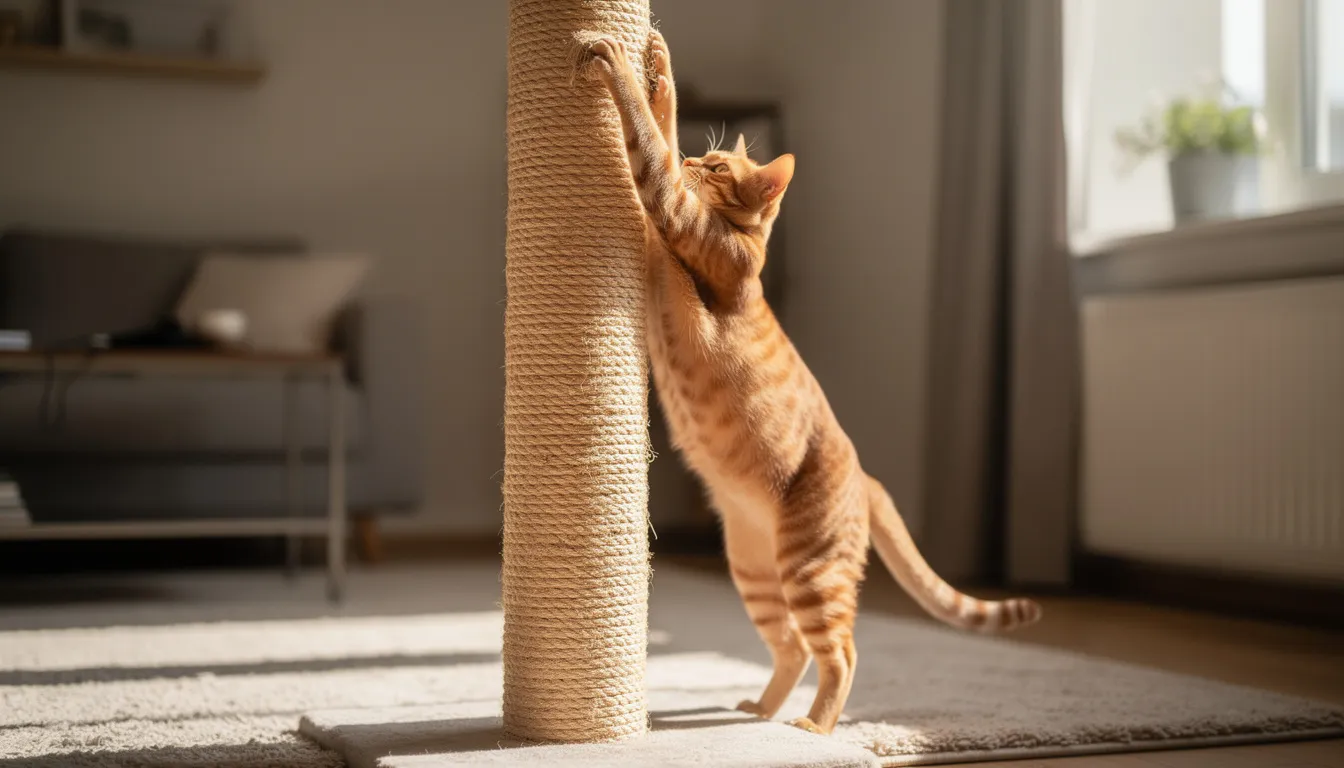
Place at least one scratching post near the sleeping area and another near the doorway—these are natural scratching zones. Consider sisal rope posts for durability or corrugated cardboard for cats that prefer horizontal scratching.
For rabbit owners: Physically separate your rabbit housing from the cat’s safe room during the first weeks. Use baby gates or solid barriers to prevent either species from chasing or stressing the other. This separation is non-negotiable until proper introductions have been completed.
Feeding & fresh water
Cats are obligate carnivores, meaning they cannot thrive on vegetarian or vegan diets. Their bodies require specific amino acids like taurine that are found naturally only in animal tissue. Choosing complete, balanced, life-stage-appropriate cat food is one of the most important aspects of the care of a cat.
Choosing the right food
Select a reputable commercial kitten food for cats under 12 months old, then transition to an adult cat formula. Most cats over 7 years benefit from senior formulas. Always base feeding amounts on your cat’s weight and body condition—not just the packet recommendations, which tend to overestimate portions.
Wet food vs dry food
|
Type |
Pros |
Cons |
|---|---|---|
|
Cat wet food |
Higher moisture content supports urinary and kidney health; often more palatable. |
Must be consumed within 20–30 minutes; more expensive; requires refrigeration after opening. |
|
Dry cat food |
Convenient; can be left out longer; may help with dental texture |
Lower moisture content; easier to overfeed; some cats become addicted to the crunch |
Many cats do well on a combination of both. If you need to switch foods, do so carefully over 7–10 days in order avoid digestive upset. Start with 25% new food mixed with 75% current food, then slowly shift the ratio.
Feeding routines
- Adult cats: Two measured meals per day (morning and evening)
- Kittens: 3–4 smaller meals spread throughout the day
- Avoid free-feeding: Leaving a food dish filled with high-calorie dry food leads to obesity in most cats
Water matters
Cats need constant access to clean, fresh water. Many domestic cats instinctively avoid stagnant water—a behaviour inherited from wild cats who learned that still water might harbour bacteria or parasites.
For optimal hydration:
- Use wide, shallow ceramic or stainless bowls to prevent whisker fatigue
- Change water daily—clean the water bowl with soap weekly
- Place the water bowl away from the food dish (cats prefer this separation)
- Consider a recirculating fountain for cats that prefer running water; this supports kidney and urinary health

Safe and unsafe foods
Never give your cat these human foods:
- Onions, garlic, leeks, and chives (toxic to red blood cells)
- Chocolate, caffeine, and alcohol
- Xylitol (artificial sweetener found in gum and some peanut butters)
- Grapes and raisins
- Heavily salted or seasoned meats
- Bottle caps, string, or small objects that could cause intestinal blockage requiring surgical removal
Safe occasional treats (under 10% of daily calories):
- Plain cooked chicken or turkey (no bones, no seasoning)
- A teaspoon of tuna in spring water (not brine or oil)
- Commercial cat treats formulated for felines
Note for rabbit owners: Rabbit pellets, hay, and leafy vegetables are not suitable cat foods. Cats should never share rabbit diets or litter trays, as this can cause digestive issues and facilitate disease spread between species.
Litter box training and hygiene
Most cats naturally use a litter box with minimal training—their instinct to bury waste is strong. However, the right set-up makes all the difference between a cat that uses the box reliably and one that develops elimination problems.
The golden rule
As a general rule, provide one litter box per cat, plus one extra. For two cats, that means three boxes placed in different areas of the house.
Box placement and litter choice
- Position boxes in quiet, easily accessible locations away from food, water, and high-traffic corridors
- Avoid basements or laundry rooms where loud appliances might startle the cat.t
- Choose unscented clumping or fine-grain litter—avoid heavily perfumed products.
- Duslitterers can irritate respiratory systems, especially in young kitties.ns
Cleaning routine
|
Task |
Frequency |
|---|---|
|
Scoop solid waste and clumps |
At least once daily |
|
Top up litter to maintain depth |
As needed |
|
Fully empty and wash the tray |
Every 1–2 weeks with mild unscented soap |
Keeping the litter box clean is essential. Cats are naturally fastidious, clean animals and may refuse to use a dirty box, leading to accidents elsewhere.
Troubleshooting
If your cat starts toileting outside the box:
- Rule out medical issues first—urinary infections, kidney problems, and arthritis can all cause litter box avoidance
- Review box cleanliness—is it being scooped daily?
- Consider the litter type—if the cat dislikes the texture or scent, try a different brand.d
- Evaluate location—is the box in a stressful or hard-to-reach spot?
- Check for household stressors—new pets, visitors, or changes in routine can trigger elimination issues.
Housebreaking tips for kittens and new cats
When introducing a new kitten to your home, show them the litter box immediately upon arrival. Young kittens sometimes forget box locations or experience sudden urges—this is normal and temporary.
To encourage proper use:
- Place the kitten in the tray after meals and naps
- Gently scratch their front paws in the litter once or twice
- Leave them in peace—never force them to stay
- Praise quietly when they use the box correctly
Never punish accidents. Cats don’t connect punishment with past behaviour. Instead, calmly clean the area with an enzymatic cleaner (which eliminates odour markers) and gently guide the cat back to the box.
During the first few weeks, place an extra tray on whatever level of the house your new cat is spending most of their time.
Grooming and claw care
Although cats groom themselves meticulously—most cats spend up to 50% of their waking hours on self-care—regular grooming by their human provides benefits that self-grooming can’t achieve. It reduces loose hair and hairballs, keeps the cat’s coat clean and healthy, and helps you spot skin problems or parasites early.
Brushing frequency
|
Coat type |
Frequency |
Notes |
|---|---|---|
|
Short-haired cat |
1–2 times per week |
More during shedding season |
|
Long-haired cats |
Daily |
Prevents mats and tangles |
|
Senior cats |
Daily |
Often struggle with self-grooming |
Recommended tools
- Short coats: Soft bristle brush or rubber grooming mitt
- Long coats: Wide-tooth comb followed by slicker brush
- All coats: A quality cat brush appropriate for the coat length
Introduce grooming gradually using treats so your cat associates the experience with positives. Brush on the couch together to create a relaxing bonding experience.

Nail trimming
Nail trimming is an important component of claw care that many owners overlook. Use small cat nail clippers designed for felines.
- Trim every 2–4 weeks.
- Clip only the clear tip—never cut into the pink quick (the blood vessel visible inside the nail)
- If your cat struggles, stop and resume later rather than forcing the issue
- Reward cooperation with treats
Regular nail trimming, combined with appropriate scratching posts, keeps your cat’s claws healthy and protects your furniture.
Bathing
Most healthy adult cats rarely need full baths—they’re excellent self-groomers. However, bathing becomes necessary when:
- The cat’s fur accumulates stubborn dirt or grease
- Mobility issues prevent self-grooming (common in older cats)
- The cat is a hairless breed (requiring weekly baths to remove body oils)
When bathing is needed, use cat-safe shampoo (unscented and hypoallergenic if possible), warm water, and keep the room draft-free until the cat is completely dry. Have treats ready to reward cooperation.
Dental and ear care
Good dental hygiene prevents painful conditions that affect many cats as they age. Ask your vet to demonstrate teeth brushing using cat-specific toothpaste—never human toothpaste, which is toxic to cats. Aim for brushing a few times per week if possible.
Watch for signs of dental problems:
- Bad breath
- Drooling
- Pawing at the mouth
- Reluctance to eat hard food
Professional veterinary dental cleaning under anaesthesia may be needed periodically, especially for older cats.
For ear care, check ears weekly for redness, discharge, or strong odour. Use only vet-recommended ear cleaners and never insert cotton buds into the ear canal, which can damage the delicate structures inside.
Play, enrichment, and scratching behaviour
Play isn’t optional—it’s essential for both mental and physical stimulation. Without adequate enrichment, indoor cats become bored, overweight, and prone to behaviour problems. Understanding your cat’s natural hunting cycle (stalk–chase–pounce–eat–groom–sleep) helps you provide activities that satisfy their instincts.
Daily play sessions
Aim for 10–15 minutes of interactive play at least twice daily, ideally in the morning and evening when cats are naturally most active. Effective cat toys include:
- Wand toys and feather teasers (mimics prey movement)
- Small balls and rolling toys
- Laser pointers (always end with a physical toy the cat can “catch”)
- Crinkle balls and catnip mice
Rotate toys weekly to maintain your cat’s interest—even the perfect cat toy becomes boring if it’s always available. Store some away and reintroduce them later as “new” discoveries.
Mental enrichment
Beyond physical play, keep your cat’s mind engaged with:
- Puzzle feeders that make the cat work for food
- Food balls that dispense treats as they roll
- Paper bags and cardboard boxes for exploration
- Window perches for bird-watching
Scratching behaviour
Cat scratches serve multiple purposes: claw maintenance, full-body stretching, and territorial marking. Without appropriate outlets, cats will likely use household furniture.
To encourage proper scratching:
- Place a scratching post near sleeping areas and high-traffic zones (doorways, beside sofas)
- Choose posts tall enough for full stretches (60–80 cm minimum)
- Offer both vertical posts and horizontal scratchers—some cats prefer one over the other
- Sprinkle catnip or silvervine on new scratching surfaces
- Reward use with treats and praise
If your cat prefers the sofa over their post, try:
- Double-sided tape on furniture corners (cats dislike the sticky texture)
- Furniture covers in high-risk areas
- Regular nail trims to minimize damage
- Moving the scratching post directly next to the targeted furniture
Never declaw your cat. Declawing is an inhumane, outdated practice that involves amputating the last bone of each toe. It causes chronic pain, behavioural problems, and is banned in many countries. There’s never a reason to use a spray bottle as punishment for scratching—positive redirection works far better.
Indoor vs outdoor cats and safe exploration
The debate between keeping cats indoors versus allowing outdoor access continues among cat guardians. Here’s what to consider:
|
Lifestyle |
Pros |
Cons |
|---|---|---|
|
Indoor cats |
Longer lifespan, protection from traffic/predators/disease, no risk of getting lost |
Require more enrichment, potential for boredom,m and obesity |
|
Outdoor cats |
Natural behaviours fulfilled, mental stimulation |
Shorter average lifespan, risk of injury, may hunt wildlife |
Many cats can live happily indoors with proper enrichment. If you want to offer outdoor access safely, consider:
- A secure “catio” (enclosed outdoor space)
- Supervised garden time on a cat-specific harness
- Window perches with bird-safe feeders outside for visual stimulation
- Cat trees placed near windows for climbing and observation
For multi-pet homes: In households with both cats and rabbits, cats should never be allowed unsupervised near the rabbit’s enclosure—indoors or outdoors—even if the animals appear to get along. Prey drive can activate suddenly, and rabbits can die from shock even without physical contact.
Veterinary care, health monitoring, and neutering
Establishing a relationship with a good veterinarian is fundamental to your cat’s health. Look for a cat-friendly clinic, ideally one accredited or clearly experienced with feline medicine and low-stress handling techniques.
Basic health schedule
|
Age |
Care needed |
|---|---|
|
8–9 weeks |
First vaccinations |
|
12 weeks |
Booster vaccinations |
|
4–6 months |
Spay/neuter (varies by local guidance) |
|
Annually |
Wellness exam, booster vaccines, parasite control review |
|
8+ years |
Senior wellness checks (may recommend twice yearly) |
Core preventative care
Vaccination protects against serious diseases, es including:
- Feline panleukopenia (feline distemper)
- Feline calicivirus
- Feline herpesvirus (FHV)
- Rabies (where legally required)
Most cats with conditions like FHV can live typical lifespans with proper nutrition and veterinary care, though they may have periodic flare-ups.
Regular flea, tick, and worm control using vet-approved products prevents parasitic diseases. Over-the-counter products are often less effective and occasionally dangerous—always consult your vet.
Spaying and neutering
Spaying female cats and neutering males provides significant health and behavioural benefits:
- Reduced roaming and territorial spraying
- Lower risk of certain cancers (mammary tumours in females, testicular cancer in males)
- Fewer unwanted littecontributeing to overpopulation
- Calmer behaviour in many cats
Warning signs requiring prompt vet attention
Contact your veterinarian immediately if you notice:
- Sudden changes in appetite or drinking habits
- Straining in the litter box or blood in urine
- Vomiting more than once or twice in 24 hours
- Difficulty breathing or open-mouth panting
- Sudden hiding or withdrawal from normal activities
- Any significant behaviour change
Early intervention often means simpler treatment and better outcomes for your cat’s health.
Keeping records and emergency planning
Maintain a folder (physical or digital) containing:
- Vaccination dates and certificates
- Microchip number and registration details
- Insurance policy information
- Records of chronic conditions or ongoing medications
Know the address and phone number of your nearest 24/7 emergency vet and save it in your phone. Keep poison control numbers handy for your country.
Prepare a simple “go-bag” for emergencies:
- Cat carrier (kept accessible)
- Three days’ worth of food
- Collapsible food and water bowls
- Small litter tray and litter
- Photocopies of medical records
- Recent photo of your cat (helpful if they escape)
Introducing a new cat to existing pets and family
Bringing a new cat into a home with established pets requires patience and a controlled, stepwise approach. Rushing introductions creates stress and can damage relationships permanently—both you and your existing pets will appreciate taking things slowly.
Scent swapping first
Before any visual contact:
- Exchange bedding between the new cat and the resident animals
- Rub a cloth on the new cat’s cheeks, then place it near the resident pet’s food bowl
- Allow investigation of scent without the stress of direct contact
- Continue for several days until all animals seem relaxed with each other’s smell
Cat-to-cat introductions
If you’re adding a second cat to a home with an existing feline:
- Keep the new cat in their safe room initially
- Allow door-crack or baby-gate meetings where other cats can see and smell each other without full contact
- Feed both cats on opposite sides of the barrier, gradually moving bowls closer
- Graduate to short supervised sessions with multiple escape routes available
- Watch for signs of stress (hissing, growling, flattened ears) and separate immediately if tensions rise
- Slowly increase supervised time together over days or weeks
Two cats can become companions, but some cats remain happiest as solo pets. Respect their preferences.
Dog-cat introductions
For homes with dogs:
- Keep the dog on a lead during initial meetings
- Reward calm, relaxed behaviour with treats
- Ensure the cat has high shelves and escape routes
- Never allow the dog to chase, even playfully
- Stop immediately if the dog lunges, fixates, or shows predatory body language
Cat-rabbit households
If you already have rabbits:
- Never allow chasing under any circumstances
- Maintain secure rabbit housing at all times
- Keep shared time limited, supervised, and low-stress for the rabbit
- Remember that rabbits can die from fear alone—even if no physical contact occurs
- Some cats and rabbits can coexist peacefully; others never will. Prioritize safety over forcing a relationship.
Cats, children, and household rules
Teaching children to interact kindly with cats prevents injuries and builds positive relationships:
Ground rules for kids:
- No grabbing, tail-pulling, or chasing
- Let the cat choose when to be petted and when to walk away
- Never disturb cats when eating, using the litter box, or hiding
- Use quiet voices around the cat
Adults should supervise all interactions between cats and toddlers or early school-age children. Use positive experiences like treat-giving and gentle play sessions so the cat associates children with good things.
Everyday routines and long-term wellbeing
Consistency is comforting to cats. Establishing daily and weekly routines helps your feline friend feel secure and ensures nothing important gets overlooked.
Sample daily schedule
|
Time |
Activity |
|---|---|
|
Morning |
Feed breakfast, scoop litter box, brief play session |
|
Daytime |
Quiet time (most cats sleep 12–16 hours); ensure water is fresh |
|
Evening |
Feed dinner, longer play, anda cuddle session |
|
Before bed |
Check food, water, litter box, and secure doors/windows |
Weight monitoring
Check your cat’s weight monthly at home using a bathroom scale (weigh yourself, then weigh yourself holding the cat, and subtract). Your vet should assess body condition yearly. Catching weight gain early prevents obesity-related health issues like diabetes and joint problems.
A healthy cat has a visible waist when viewed from above and ribs that can be felt but not prominently seen.
Planning for absences
Cats prefer staying in their familiar environment, so in-home care is ideal when you’re away. Options include:
- Trusted friends or neighbours who can visit daily
- Professional pet sitters
- Reputable catteries (for longer absences)
If using a cattery, visit in advance to check cleanliness, staff knowledge, and whether cats are housed individually with adequate space and enrichment.
A final thought on good health and happiness
With consistent care, observation, and gentle handling, domestic cats routinely live well into their mid- to late-teens—and some reach their early twenties. The keys to a healthy cat are simple: quality nutrition, regular veterinary care, daily enrichment, and the security of routine.
For those of you who came to Rabbit Life Hack for rabbit care but are now expanding to a multi-species household, the principles remain remarkably similar: patience, proper nutrition, environmental enrichment, and attentive observation. Your cat can live happily alongside your rabbits when both species’ needs are understood and respected.
Whether you’re bringing home a new kitten or welcoming an adult cat into your family, the care of a cat is a rewarding commitment. These remarkable animals offer companionship, entertainment, and unconditional affection to those who provide for their needs.
If you have questions about integrating cats and rabbits in your home, or if you’d like more guidance on multi-pet households, don’t hesitate to reach out. And for those managing both species, remember: the effort you put into understanding each animal’s unique needs creates a harmonious home where everyone—human and animal alike—can thrive.